Tuesday, July 30, 2013

Lyon, days 4 and 5

I've a week off this week, and one of the things I've vowed to do is catch up with blog posts, and projects on Ravelry, and paperwork, and do a bit of prospective stuff for a decorating project later in the summer... So finally, last part of the Lyon saga...

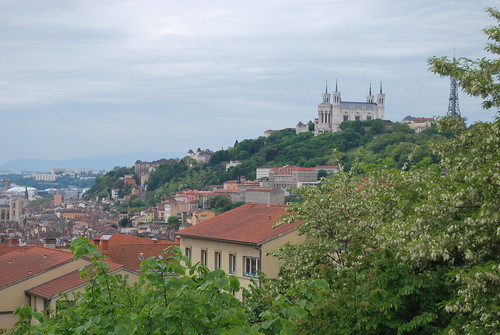
Friday, bright(ish) and early(ish), I set off for the basilica at Fourvières.  You can see it from a distance on the first picture of the previous Lyon post, sitting there at the top of the hill like a wedding cake...

Friday1

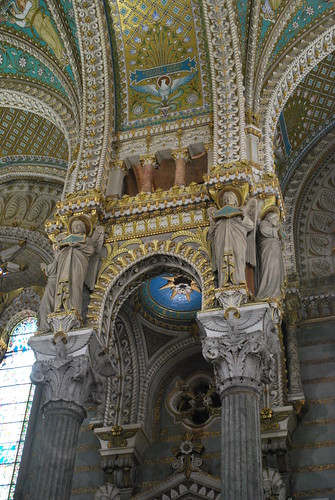
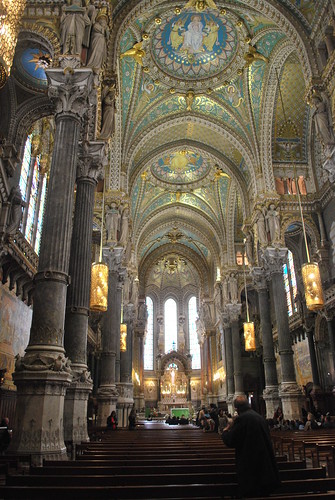
I was hoping for High 19th-century Camp, mixed with some art nouveau.  I was not to be disappointed, even before I got into the building.

Friday4

Friday5

The basilica was erected by the grateful Lyonnais immediately after the Franco-Prussian war in 1870-71, to give thanks to God for having escaped the Prussian invasion.  It dates from about the same time as the Sacré-Coeur in Paris, and it has that same quality of no small space being missed
Friday9a

Friday15

Friday17

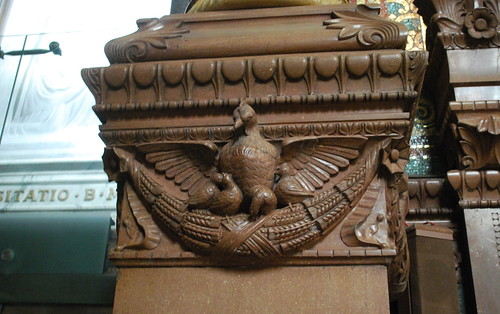
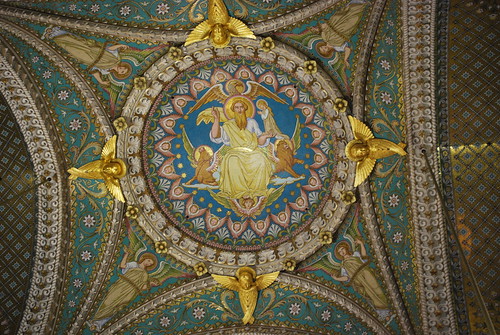
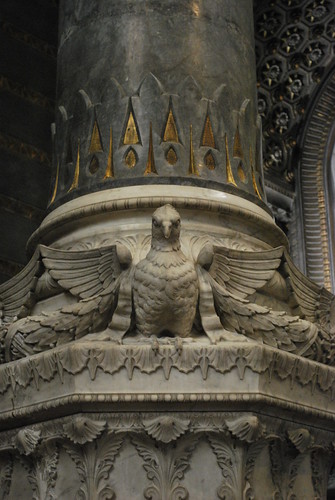
Doves of various kinds are to the fore...
Friday7

Friday8

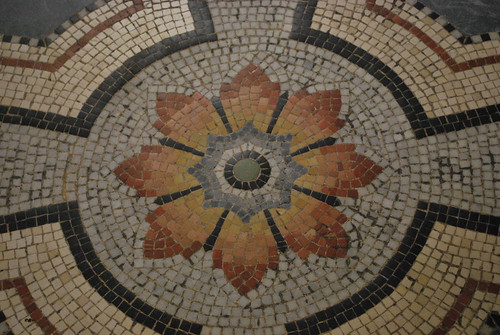
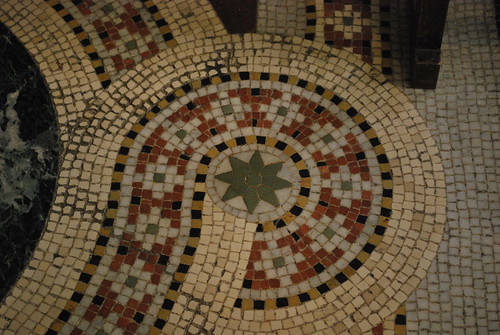
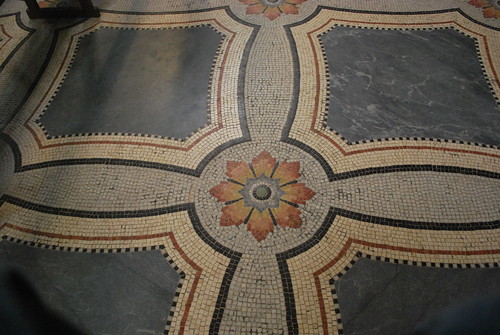
The floor mosaics were rather beautiful...
Friday9

Friday10

Friday16

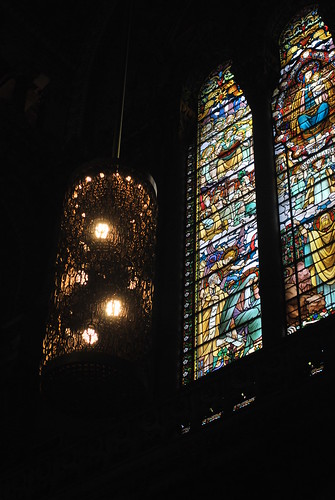
... as were both the windows and the modern light fittings
Friday6

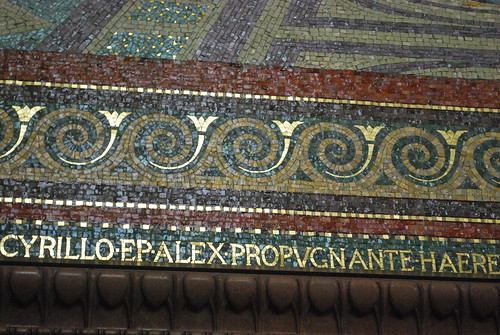
The wall mosaics were beautifully done, too;
Friday12

and, as inevitable in late 19th century France, Joan of Arc is prominantly featured as a symbol of French pride.
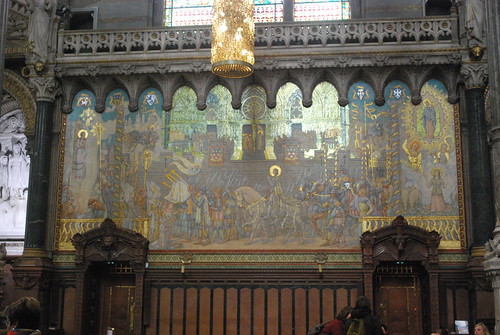
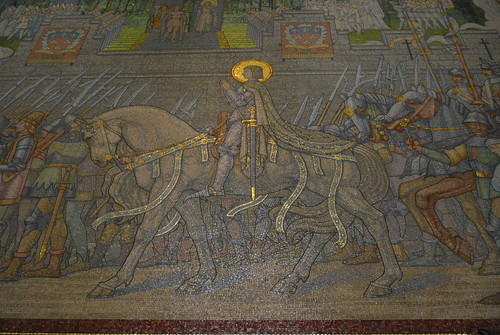
Friday13

Friday18

Anyway.  It was lovely.  If, to quote a friend, you like that sort of thing, of course.

Outside, rather a cheery statue of pope JPII, and a great view over the city.
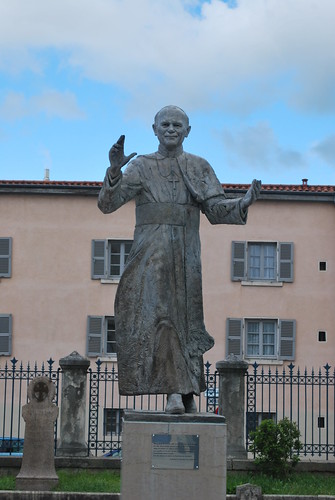
Friday19

Friday20

Back down in the funicular to Vieux-Lyon; definitely the right day to see it.  For the first time, I did actually feel as if I was in Southern France.
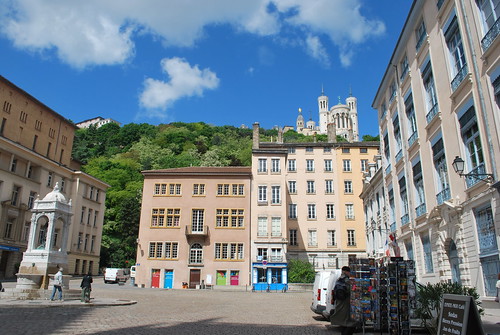
Friday23

Another cathedral, but this one was under renovation - the only thing showing behind the altar, on a white sheet, was an enormous QR code, which would presumably give helpful information to someone not equipped with a £10 pay-as-you-go Nokia...

Friday21

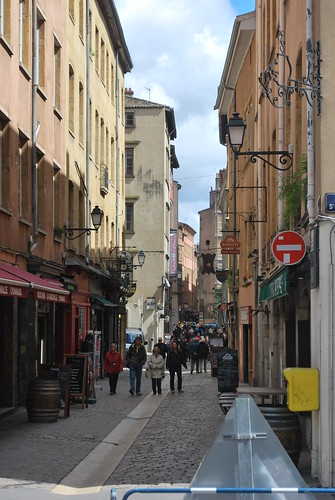
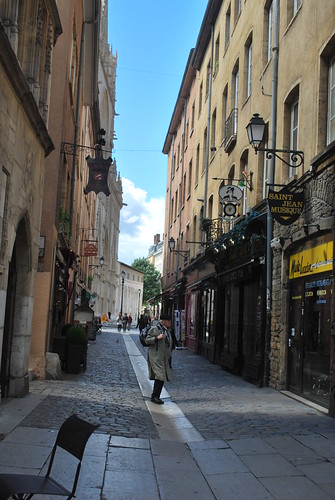
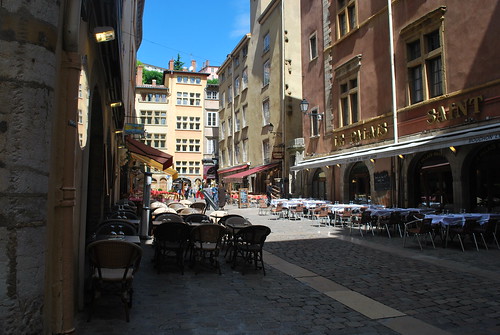
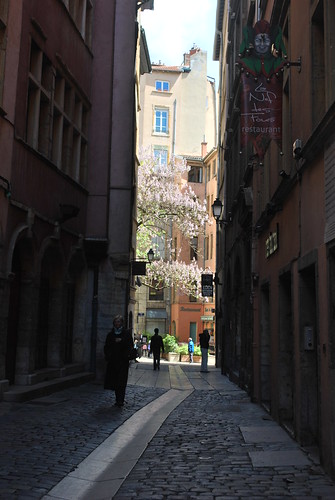
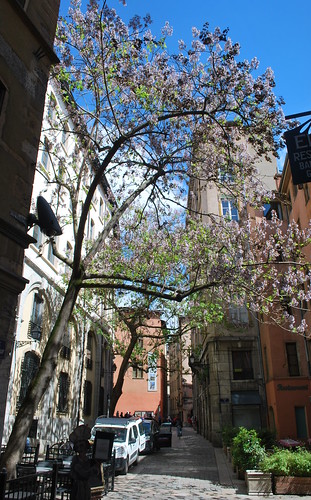
Pretty streets...

Friday23 (2)

Friday24

Friday25

Friday26

Friday27

Friday28

Friday29

Friday30

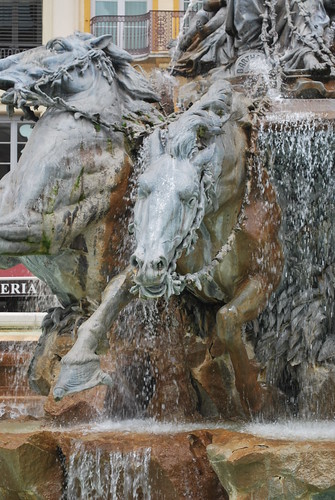
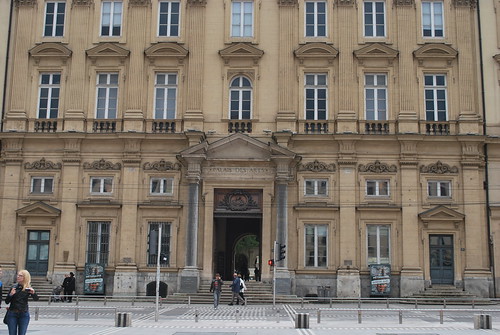
After a rather over-copious and slightly-too-touristy lunch (live and learn!) I ambled back into the middle of town and sat in a café for a while, before finding a yarn shop (yay!!) and making my way to the art gallery.  Outside in the square, this statue

Friday32

Friday33

Final stop then, the Musée des Beaux-Arts de Lyon
Friday34

By this time I was, quite frankly, all sightseen-out.  But I had a pass which got me in free, and an hour to spare, and there I was; so my plan was to tander through, and if something totally grabbed me by the throat and said LOOK AT ME I'd have a look; but if not, I'd just have a canter through, and a better look next time I come to Lyon.  I'm not a complete masochist, though, so I started with the 19th century paintings rather than looking at armour and stuff..

And the first room I came across was the Salle Janmot.  

Thud.  Love at first sight.


Completely new-to-me Pre-Raphaelite-type painter (technically, apparently, a Romantic/Symbolist, and a formative influence on one of my other favourites, Odilon Redon) - and an entire cycle (Le poème de l'âme/The poem of the soul) in one room.  The most beautiful things.


Here's the guy - Louis Janmot, from a self-portrait.


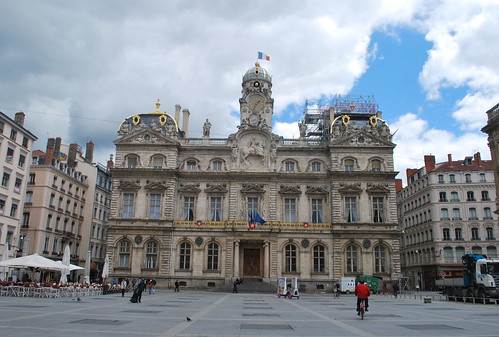
There's a book available about the cycle, which I was able to buy in the museum bookshop...  I wandered round the rest of the galleries like a stunned fish, went back to the Janmot room and spent another 15 mins or so gazing and attempting not to dribble too obviously, and then wandered out; although it was drizzling again, the Place de l'Hôtel de Ville beckoned
Friday35

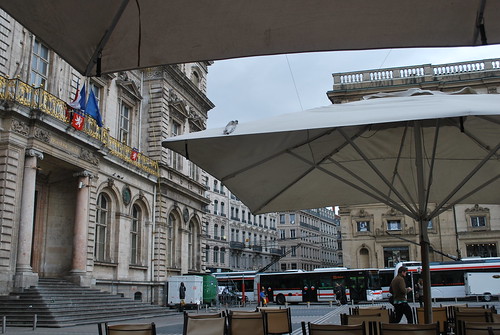
and I had an apéro under the awnings there before heading home - more grilled meat and veg...
Friday36

The following day, it was just a matter of collecting together the souvenirs and heading home...

souvenirs

Lovely city.  I'll definitely be back.


Sunday, July 28, 2013

2013 books, #56-60

Garment of shadows, by Laurie R. King. London: Allison and Busby, 2012.

I did enjoy The pirate king on first reading, checking back... But was extremely glad to see Russell casting off her actor friends and getting back to the plot in this book.  There's a slight stretching of credulity at the beginning when Russell develops amnesia, but it does prod the plot along, and gets them back to Middle Eastern derring-do; this time in 1925 Morocco.  Couple of nice plot twists, and some detail of the actual politics of the period.  Good enjoyable read...  This one also contains the novella Beekeeping for beginners  which was published as a Kindle standalone; reviewed it earlier this year.

Murder in the Sentier, by Cara Black. New York: Soho, 2002.

Another intrepid female protagonist here in Aimée Leduc, computer consultant and private investigator.  When an ex-convict appears claiming to have shared a cell with Aimée's mother, who walked out on the family when Aimée was eight, our girl's understandably curious.  When the woman is found dead shortly afterwards, and there are links to a 1970s terror group, Aimée has to investigate; sometimes in a series of very unlikely outfits.  I really enjoy these books because the Paris geography is just so excellent; you can walk these books with the map provided in the front, and the atmosphere is spot on.  The only thing which jarred in this one was the slightly lame naming of some of the organisations.  If the author had used two German surnames, rather than calling the terrorist group "Haader-Rofmein", or had a generic left-wing publishing house rather than using "Tallimard", it would all have been seamless.

A belated catchup on what I read on holiday: books read on the Kindle don't have to go back to the library or head off to the charity shop, so they don't get reviewed.

A textbook case, by Jeffery Deaver. Kindle edition.

This is a novella to introduce The Kill Room, Deaver's newest Lincoln Rhyme novel; and it was an excellent hour or so's read.  Although I've enjoyed Deaver's short stories before, something about the shorthand in the writing about characters we know well somehow jarred; but his complete mastery of a plot kicked in.  And there are some interesting medical teasers for the next book too (I'm hoping to get hold of it from the library in the next couple of weeks).

The Lewis man, by Peter May. Kindle edition.

The second of this trology. Fin MacLeod has cut ties with the mainland and moved back to Lewis permanently, but can't resist the urge to investigate when a body is found by peat-cutters; the theory that it's a prehistoric bog burial is put paid to when the corpse turns out to be sporting an Elvis tattoo.  The body is DNA tested and is found to be closely related to Marsaili, Fin's childhood girlfriend; but Marsaili's father Tormod has always said he was an only child... Tormod is now deep in the throes of dementia, and parts of the narrative show his confusion; Fin has his work cut out to piece together the life story.  Gripping, like the first part...

The ides of April, by Lindsey Davis. London: Hodder and Stoughton, 2013.

Taglined Falco: the new generation, which made me worry.  Shouldn't have, of course - Flavia Albia is a marvellous character.  Davis has wisely taken the action a few years forward, and made Flavia a young widow with an office in Falcon Court, under the reign of Domitian which is considerably more sinister than that of Vespasian.  Helena Justina and Falco himself appear as shadowy figures in the background, but the stage is largely left clear for this feisty, articulate investigator.  There's one "could have seen it coming a mile off" element to the plot, but it really doesn't matter; with any luck, this is the first of many in this new series.  I was sad when Davis announced she'd come to the end of the line with Marcus Didius, but this is a worthy successor.

Sunday, July 14, 2013

Lyon, day three

Eventually!  It's been a very busy last few weekends, and photo-heavy posts are always a bit awkward to put together...  but seeing the Tour de France pass through Lyon yesterday gave me an additional push to post this...

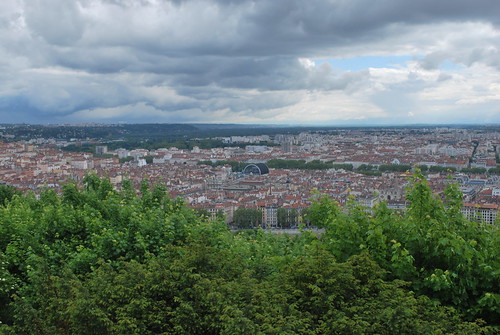
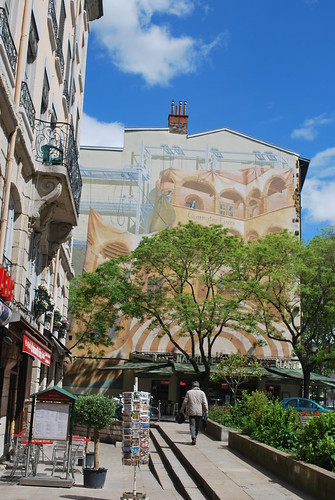
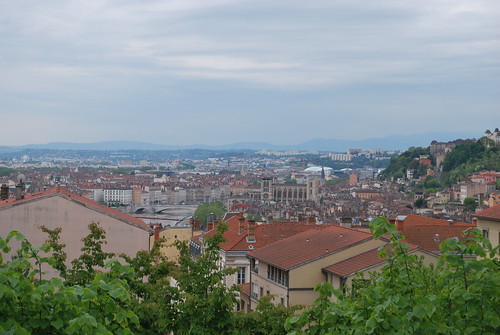
So; day three and the Croix-Rousse.  Unlike yesterday's cyclists, who made getting up the hill look pretty effortless, I got up there by an extremely sloping Metro train which was halfway to a funicular.  Had a wander slightly down the hill to the viewing platform for a look across the city

Thursday2

Thursday3

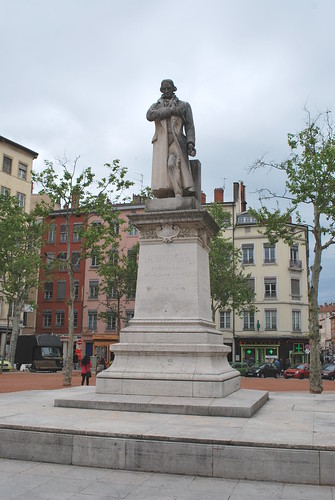
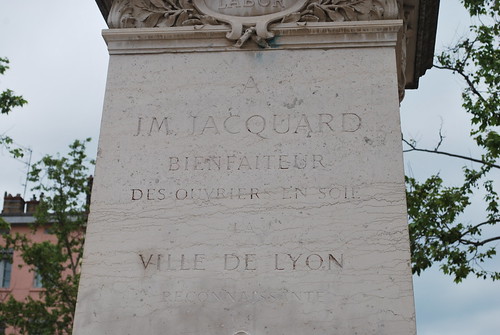
and then a wander slightly back up to the Place Jacquard.  Another textile-linked location with a statue looming (sorry) above it:

Thursday5

Thursday6

I was intending to get there early enough to walk up to the Maison des canuts and find out more about the silk weaving trade in Lyon, but a combination of indolence and a short rainstorm as I was due to set out from the studio meant that's one for next time.  (There's definitely going to be a next time...)

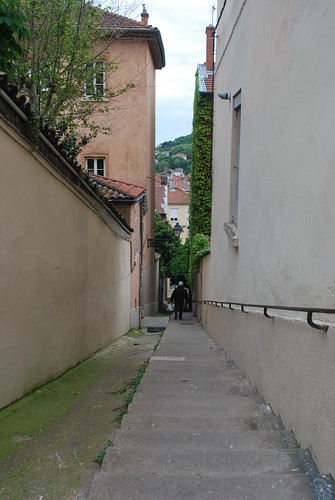
Croix-Rousse was recommended by a friend, and it's a lovely bit of town; a little like the quieter bits of Montmartre out of tourist season.

Thursday8

Thursday7

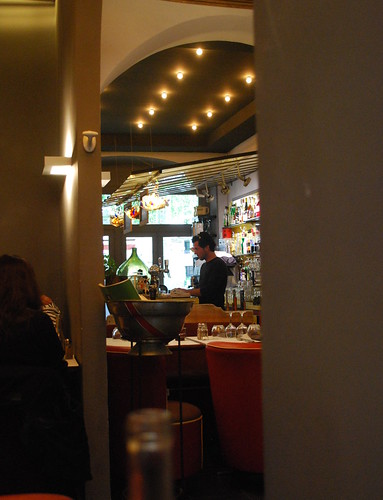
After a wander about, and a purchase of Provençal green beans and olive-wood kitchen implements (box ticked; was really hoping to find some) at the market later, I evaded a creepy man who was intent on taking me for a drink, repaired to a restaurant I'd scoped out on the internet, and had a really excellent lunch with kir à la framboise and pot lyonnais.

Thursday10

(La Coquette, if you're interested; highly recommended.  Really nowhere near as formica-heavy as it looks on the photos...)

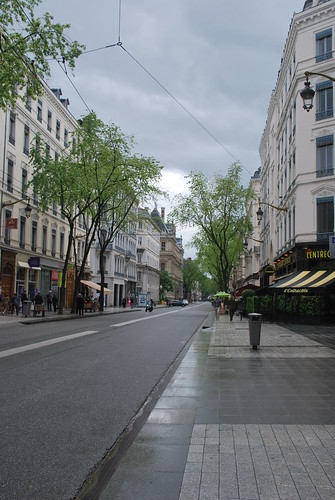
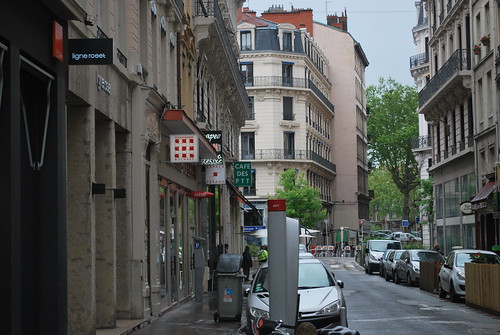
Another short but very sharp rain shower put me off heading over to further heights/viewpoints, so change of plan to take in the presqu-île.  This is, according to my guidebook, the top of the Lyon equivalent of Oxford Street.  (I don't think the writers of the guidebook have visited Oxford Street recently.  Or, possibly, ever.  But Rue de la République does have branches of most of the major chains further into town.)

Thursday12

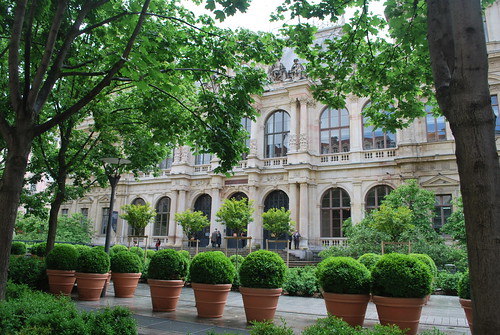
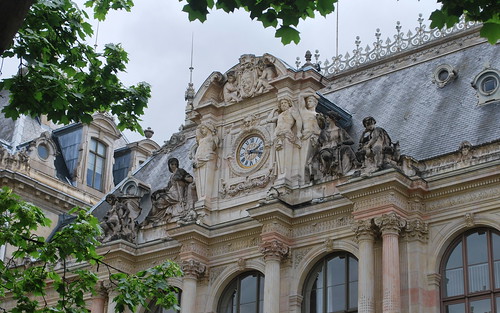
The Palais de Commerce - most large French towns have one of these, but this one is particularly spectacular.

Thursday14

Thursday15

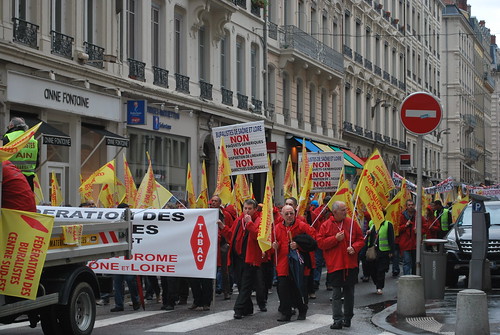
There was a demonstration, or manifestation as the French have it; this seems to fit pretty well, because with all the whistles and the flags and the police escort, it also feels like a bit of performance art.  This was a particularly fine-sounding one, so I stopped to watch.  Which noble cause was being fought for?  World peace? Education? Liberté, égalité et fraternité?

Thursday17

Ah, they're against the ban on plain cigarette packs and closed displays.  Ho hum.  But I do like the way they finish with "No to EU Directives", which is at least pretty comprehensive and covers all bases!

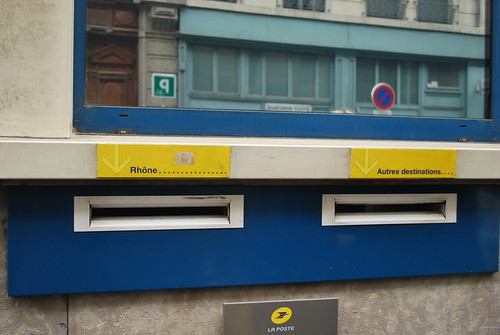
One of the (many) things I love about the French is their entirely unimaginative way of naming bars and cafés; when you're casting around for somewhere to sell you stamps for your postcards, having incomprehensibly lost one of the US stamps, seeing this

Thursday19

around the corner is great.  Where the Café des Postes, télégraphes et téléphones is, there shall be the post office also.  And indeed there was.

Thursday20

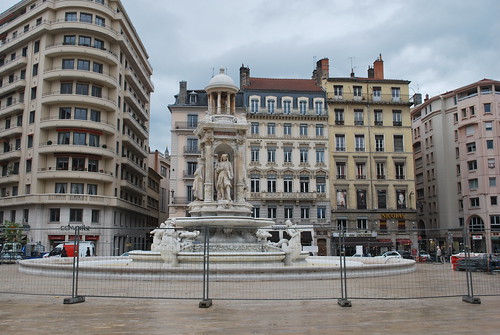
Likewise, I wasn't sure whether this was the Place des Terraux or the Place des Jacobins, but helpfully, there's the Café des Jacobins on the right...  Likewise, you always know what you're going to get at the Bar des Sports in a small town (lots of blokes, big screen, Baby-foot, possibly pool table, cheap drinks and a high tolerance of horseplay).

Thursday21

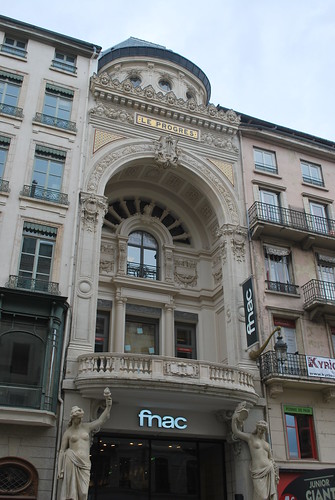
Made a quick trip to Fnac; I do love a Fnac shop.  This one is particularly fine.

Thursday22

So many of the French singer-songwriters I like haven't produced anything new in the last few years; thankfully Jacques Higelin is still going strong...

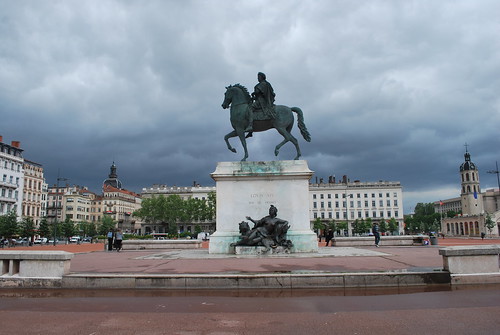
One last picture, of the huge and (on that day) rather desolate Place Bellecour; Louis XIV lords (kings?) it over the square...

Thursday23

At that point the heavens opened.  I ducked into a bar for a pre-dinner drink, and then home via the butchers - veal chop, bearnaise sauce and Provençal green beans. Heaven.  Particularly because I found Un dîner presque parfait which was just lovely - I gather there are similar formats on UK TV but I never have time to catch up with that sort of thing!

Before dinner, I met my lovely landlord, finally - had to pay him for the rent, and while I'd already pretty much settled in, it being the third day of five, he had another couple of hints and tips.  One of the first things he spotted was my knitting:

studio10

Apparently his wife's a knitter, and he was asking about good UK yarn sites for British wools.  I scribbled down some names and URLs including the Ravelry one, just in case!

2013 books, #51-55

Bloodline: a Dick Francis novel, by Felix Francis [audiobook]. Read by Michael Maloney.  Bath: AudioGO, 2012.

This is a classic from the Francis stable (sorry); so glad Felix Francis has taken on the family business.  This time, his protagonist is a young race commentator, Mark Shillingford, with a twin sister who's a top jockey.  In a meeting at Lingfield, he sees sister Clare deliberately stop her horse; when he takes her up on it, they argue, and later that night Clare is dead, having jumped from the 11th floor of a London hotel.  Or so it seems...  This is seriously vintage Francis, without being a complete repetition of what's gone before; and Michael Maloney's reading is excellent, particularly in the commentary sections; he maintains the clipped, stiff-upper-lip decorum of Tony Britton and Nigel Havers while bringing his own edge to it.

Like this, for ever, by S J Bolton. London: Bantam, 2013.

11-year old boys are disappearing from South London and being found by the Thames, their blood drained. Mark Joesbury and Dana Tulloch investigate, but wherever they go, they run into Lacey Flint.  Lacey's young neighbour Barney is convinced his dad has a secret; Tulloch suspects Lacey; Lacey and Joesbury carry on their complicated dance.  Another excellent, complex thriller from S J Bolton, with some switchback twists and turns.  You need to read the other two Joesbury/Flint novels (Now you see me and Dead scared) before this one to understand some of the situation, but it would also work well as a standalone if you're not as hung up as I am on reading books in order!

How to be a woman, by Caitlin Moran. London: Ebury Press, 2011.

I recognised so much in this book, even though I'm four years older than Moran, from a small North East town, not a large West Midlands one, my family was totally different and I've had a completely different life.  In fact, I think the only thing we do have in common other than the 80s references (and let's not underestimate those) is both being women.  I was shocked, air-punchingly-in-agreement, immensely entertained and very occasionally actually appalled by this book, and would recommend it to anyone with a reasonable tolerance for sex and sweariness.  Sometimes Moran will go off on a rant and I'm thinking "sing it, sister!", and then sometimes I'll think "what? hm? hang on!!"; but it's well-written by someone who's never less than compassionate, with a fine self-deprecating edge.

Sidney Chambers and the shadow of death, by James Runcie [audiobook]. Read by Peter Wickham. Oxford, Isis, 2012.

I enjoyed this; a nice gentle read.  But I think I'd expected to enjoy it a bit more.  Sidney is interesting enough - an upper middle-class vicar of Grantchester - and the Cambridge setting is just right.  I think it's the fact that instead of one overarching plot, it's quite episodic, in the tradition of Father Brown.  I also didn't have a lot of sympathy for the main female character...If you like the "cosy" end of detective fiction, this is one for you.  And as ever, I'd recommend Peter Wickham's reading for this sort of book.

The Dazzle, by Robert Hudson. London: Jonathan Cape, 2013.

A novel about a strange phenomenon in 20th century history, the tuna-fishing craze centred around Scarborough in the 1930s.  The book's much more than that, though - Hudson seems to capture exactly the sort of cast-adrift, aimless self-destruction of the inter-war fast set which is depicted in books by Dornford Yates, and in the party set shown so well by Sayers in Murder must advertise.  Well known real-life characters such as Martha Gellhorn and Zane Grey feature along with real tuna-fishers from the period and fictional additions, and the tuna-fishing expedition turns out to cover something entirely more sinister.  The narration takes place from several shifting, unreliable positions, and important events have several versions... An excellent novel from one of the co-writers of Radio 4's Warhorses of letters.