Tuesday, July 30, 2013

Lyon, days 4 and 5

I've a week off this week, and one of the things I've vowed to do is catch up with blog posts, and projects on Ravelry, and paperwork, and do a bit of prospective stuff for a decorating project later in the summer... So finally, last part of the Lyon saga...

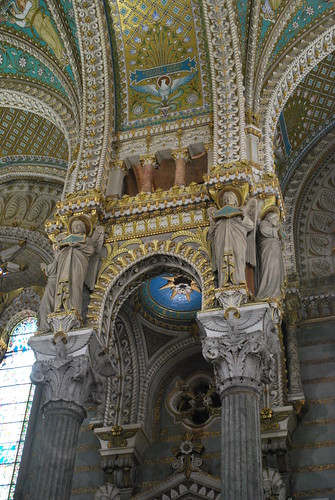
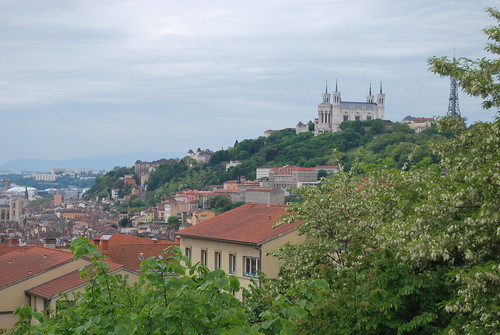
Friday, bright(ish) and early(ish), I set off for the basilica at Fourvières.  You can see it from a distance on the first picture of the previous Lyon post, sitting there at the top of the hill like a wedding cake...

Friday1

I was hoping for High 19th-century Camp, mixed with some art nouveau.  I was not to be disappointed, even before I got into the building.

Friday4

Friday5

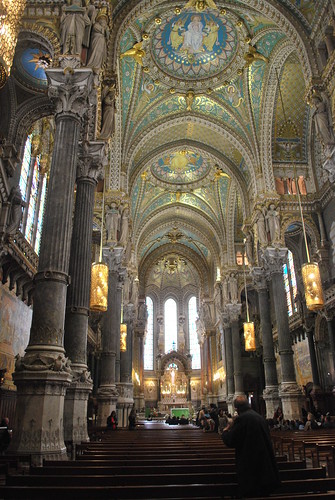
The basilica was erected by the grateful Lyonnais immediately after the Franco-Prussian war in 1870-71, to give thanks to God for having escaped the Prussian invasion.  It dates from about the same time as the Sacré-Coeur in Paris, and it has that same quality of no small space being missed

Friday9a

Friday15

Friday17

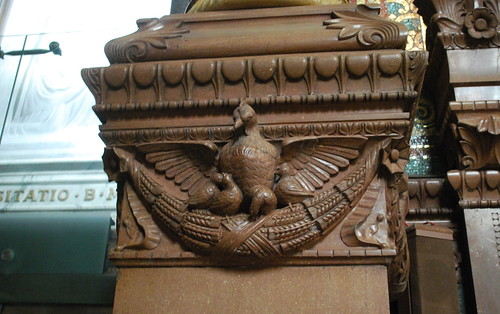
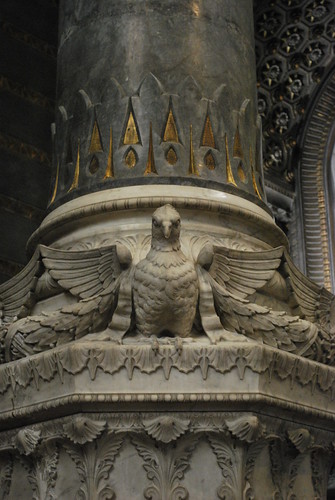
Doves of various kinds are to the fore...
Friday7

Friday8

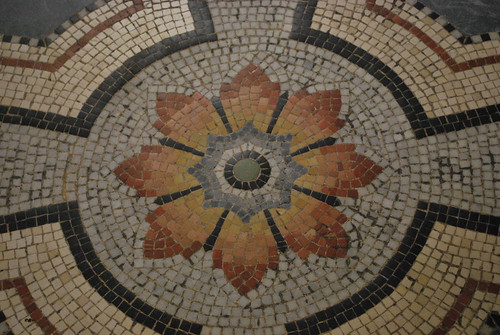
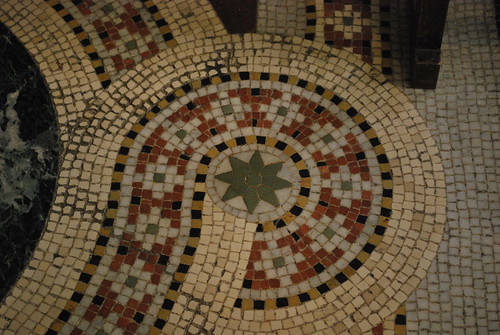
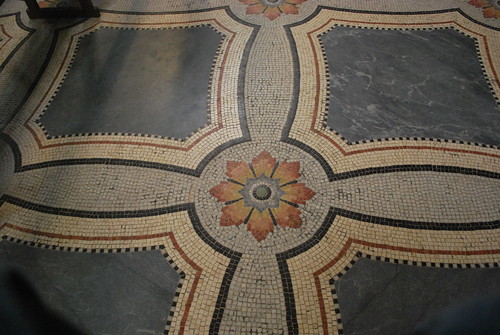
The floor mosaics were rather beautiful...
Friday9

Friday10

Friday16

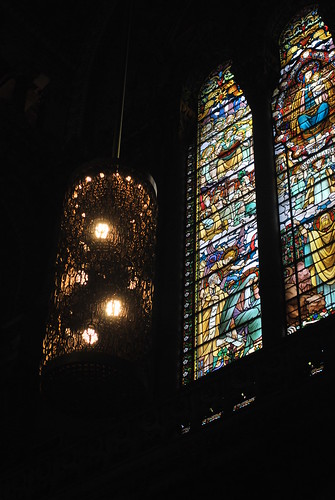
... as were both the windows and the modern light fittings
Friday6

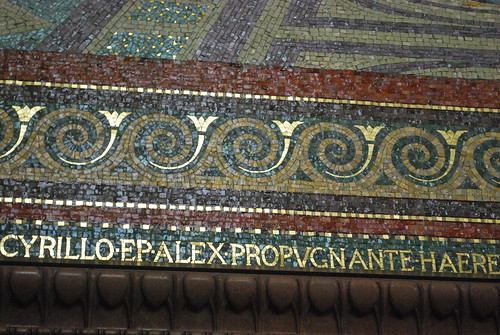
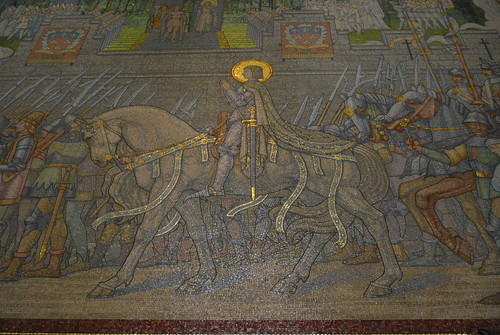
The wall mosaics were beautifully done, too;
Friday12

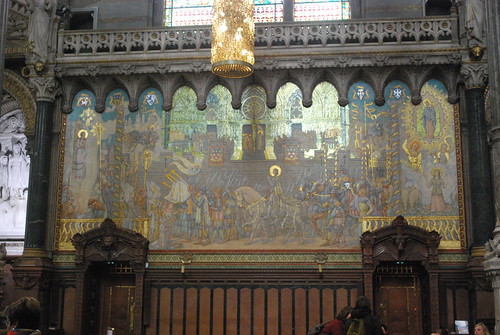
and, as inevitable in late 19th century France, Joan of Arc is prominantly featured as a symbol of French pride.
Friday13

Friday18

Anyway.  It was lovely.  If, to quote a friend, you like that sort of thing, of course.

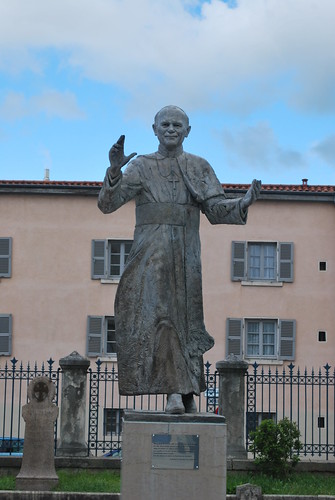
Outside, rather a cheery statue of pope JPII, and a great view over the city.
Friday19

Friday20

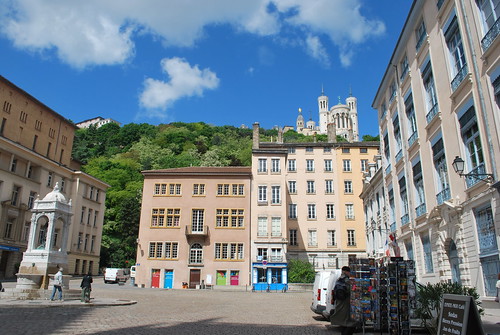
Back down in the funicular to Vieux-Lyon; definitely the right day to see it.  For the first time, I did actually feel as if I was in Southern France.
Friday23

Another cathedral, but this one was under renovation - the only thing showing behind the altar, on a white sheet, was an enormous QR code, which would presumably give helpful information to someone not equipped with a £10 pay-as-you-go Nokia...

Friday21

Pretty streets...

Friday23 (2)

Friday24

Friday25

Friday26

Friday27

Friday28

Friday29

Friday30

After a rather over-copious and slightly-too-touristy lunch (live and learn!) I ambled back into the middle of town and sat in a café for a while, before finding a yarn shop (yay!!) and making my way to the art gallery.  Outside in the square, this statue

Friday32

Friday33

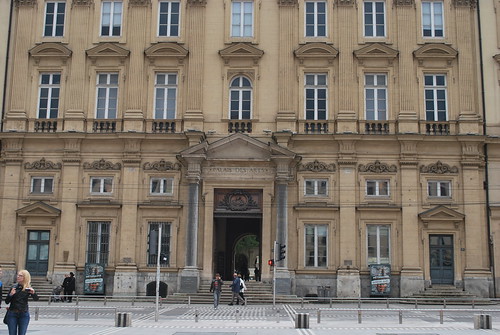
Final stop then, the Musée des Beaux-Arts de Lyon
Friday34

By this time I was, quite frankly, all sightseen-out.  But I had a pass which got me in free, and an hour to spare, and there I was; so my plan was to tander through, and if something totally grabbed me by the throat and said LOOK AT ME I'd have a look; but if not, I'd just have a canter through, and a better look next time I come to Lyon.  I'm not a complete masochist, though, so I started with the 19th century paintings rather than looking at armour and stuff..

And the first room I came across was the Salle Janmot.  

Thud.  Love at first sight.


Completely new-to-me Pre-Raphaelite-type painter (technically, apparently, a Romantic/Symbolist, and a formative influence on one of my other favourites, Odilon Redon) - and an entire cycle (Le poème de l'âme/The poem of the soul) in one room.  The most beautiful things.


Here's the guy - Louis Janmot, from a self-portrait.


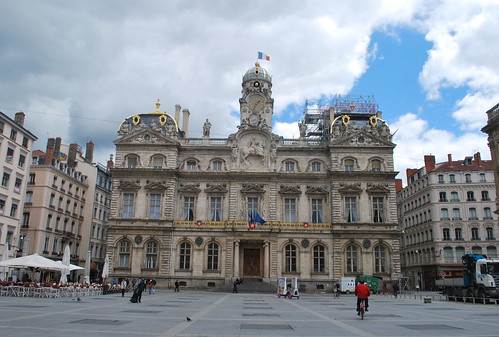
There's a book available about the cycle, which I was able to buy in the museum bookshop...  I wandered round the rest of the galleries like a stunned fish, went back to the Janmot room and spent another 15 mins or so gazing and attempting not to dribble too obviously, and then wandered out; although it was drizzling again, the Place de l'Hôtel de Ville beckoned
Friday35

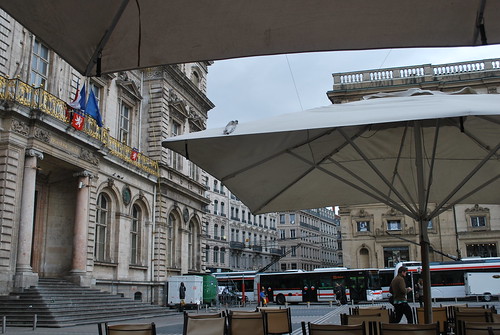
and I had an apéro under the awnings there before heading home - more grilled meat and veg...
Friday36

The following day, it was just a matter of collecting together the souvenirs and heading home...

souvenirs

Lovely city.  I'll definitely be back.


Sunday, July 28, 2013

2013 books, #56-60

Garment of shadows, by Laurie R. King. London: Allison and Busby, 2012.

I did enjoy The pirate king on first reading, checking back... But was extremely glad to see Russell casting off her actor friends and getting back to the plot in this book.  There's a slight stretching of credulity at the beginning when Russell develops amnesia, but it does prod the plot along, and gets them back to Middle Eastern derring-do; this time in 1925 Morocco.  Couple of nice plot twists, and some detail of the actual politics of the period.  Good enjoyable read...  This one also contains the novella Beekeeping for beginners  which was published as a Kindle standalone; reviewed it earlier this year.

Murder in the Sentier, by Cara Black. New York: Soho, 2002.

Another intrepid female protagonist here in Aimée Leduc, computer consultant and private investigator.  When an ex-convict appears claiming to have shared a cell with Aimée's mother, who walked out on the family when Aimée was eight, our girl's understandably curious.  When the woman is found dead shortly afterwards, and there are links to a 1970s terror group, Aimée has to investigate; sometimes in a series of very unlikely outfits.  I really enjoy these books because the Paris geography is just so excellent; you can walk these books with the map provided in the front, and the atmosphere is spot on.  The only thing which jarred in this one was the slightly lame naming of some of the organisations.  If the author had used two German surnames, rather than calling the terrorist group "Haader-Rofmein", or had a generic left-wing publishing house rather than using "Tallimard", it would all have been seamless.

A belated catchup on what I read on holiday: books read on the Kindle don't have to go back to the library or head off to the charity shop, so they don't get reviewed.

A textbook case, by Jeffery Deaver. Kindle edition.

This is a novella to introduce The Kill Room, Deaver's newest Lincoln Rhyme novel; and it was an excellent hour or so's read.  Although I've enjoyed Deaver's short stories before, something about the shorthand in the writing about characters we know well somehow jarred; but his complete mastery of a plot kicked in.  And there are some interesting medical teasers for the next book too (I'm hoping to get hold of it from the library in the next couple of weeks).

The Lewis man, by Peter May. Kindle edition.

The second of this trology. Fin MacLeod has cut ties with the mainland and moved back to Lewis permanently, but can't resist the urge to investigate when a body is found by peat-cutters; the theory that it's a prehistoric bog burial is put paid to when the corpse turns out to be sporting an Elvis tattoo.  The body is DNA tested and is found to be closely related to Marsaili, Fin's childhood girlfriend; but Marsaili's father Tormod has always said he was an only child... Tormod is now deep in the throes of dementia, and parts of the narrative show his confusion; Fin has his work cut out to piece together the life story.  Gripping, like the first part...

The ides of April, by Lindsey Davis. London: Hodder and Stoughton, 2013.

Taglined Falco: the new generation, which made me worry.  Shouldn't have, of course - Flavia Albia is a marvellous character.  Davis has wisely taken the action a few years forward, and made Flavia a young widow with an office in Falcon Court, under the reign of Domitian which is considerably more sinister than that of Vespasian.  Helena Justina and Falco himself appear as shadowy figures in the background, but the stage is largely left clear for this feisty, articulate investigator.  There's one "could have seen it coming a mile off" element to the plot, but it really doesn't matter; with any luck, this is the first of many in this new series.  I was sad when Davis announced she'd come to the end of the line with Marcus Didius, but this is a worthy successor.

Sunday, July 14, 2013

Lyon, day three

Eventually!  It's been a very busy last few weekends, and photo-heavy posts are always a bit awkward to put together...  but seeing the Tour de France pass through Lyon yesterday gave me an additional push to post this...

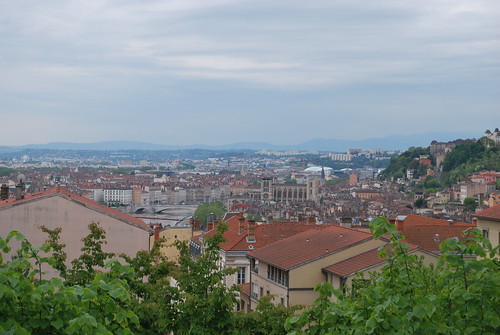
So; day three and the Croix-Rousse.  Unlike yesterday's cyclists, who made getting up the hill look pretty effortless, I got up there by an extremely sloping Metro train which was halfway to a funicular.  Had a wander slightly down the hill to the viewing platform for a look across the city

Thursday2

Thursday3

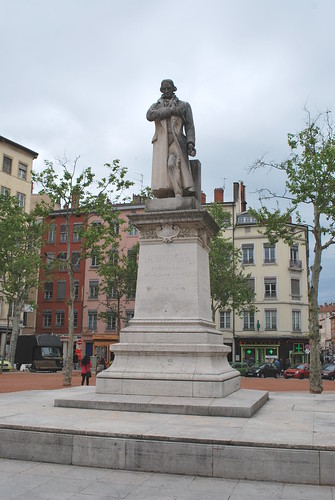
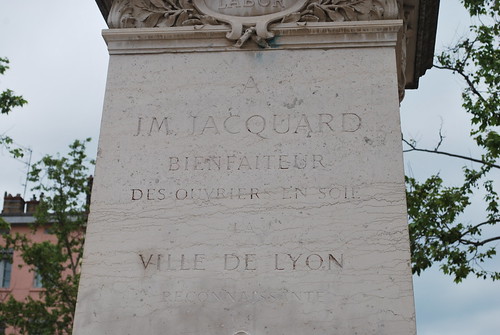
and then a wander slightly back up to the Place Jacquard.  Another textile-linked location with a statue looming (sorry) above it:

Thursday5

Thursday6

I was intending to get there early enough to walk up to the Maison des canuts and find out more about the silk weaving trade in Lyon, but a combination of indolence and a short rainstorm as I was due to set out from the studio meant that's one for next time.  (There's definitely going to be a next time...)

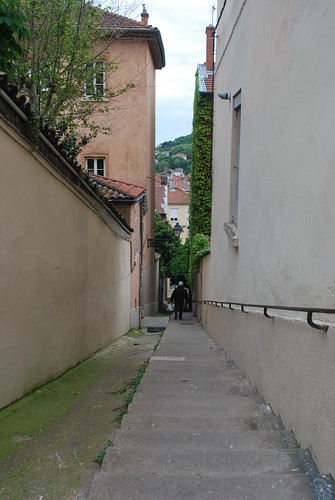
Croix-Rousse was recommended by a friend, and it's a lovely bit of town; a little like the quieter bits of Montmartre out of tourist season.

Thursday8

Thursday7

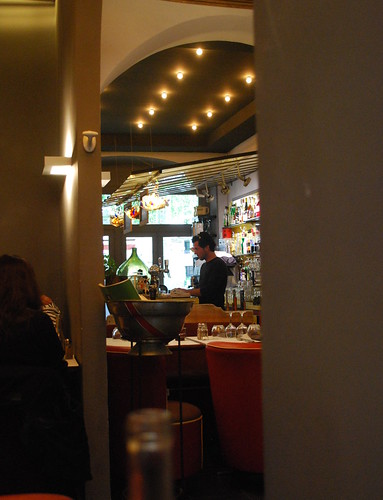
After a wander about, and a purchase of Provençal green beans and olive-wood kitchen implements (box ticked; was really hoping to find some) at the market later, I evaded a creepy man who was intent on taking me for a drink, repaired to a restaurant I'd scoped out on the internet, and had a really excellent lunch with kir à la framboise and pot lyonnais.

Thursday10

(La Coquette, if you're interested; highly recommended.  Really nowhere near as formica-heavy as it looks on the photos...)

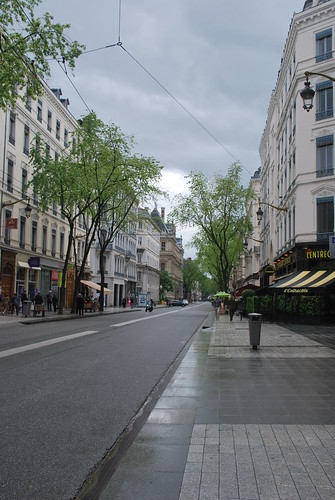
Another short but very sharp rain shower put me off heading over to further heights/viewpoints, so change of plan to take in the presqu-île.  This is, according to my guidebook, the top of the Lyon equivalent of Oxford Street.  (I don't think the writers of the guidebook have visited Oxford Street recently.  Or, possibly, ever.  But Rue de la République does have branches of most of the major chains further into town.)

Thursday12

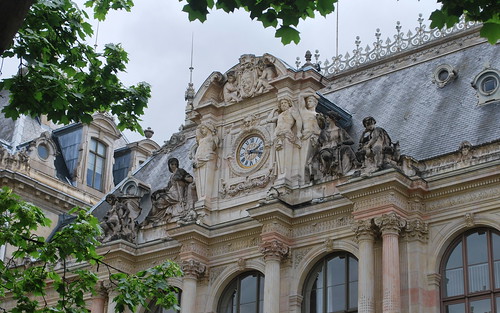
The Palais de Commerce - most large French towns have one of these, but this one is particularly spectacular.

Thursday14

Thursday15

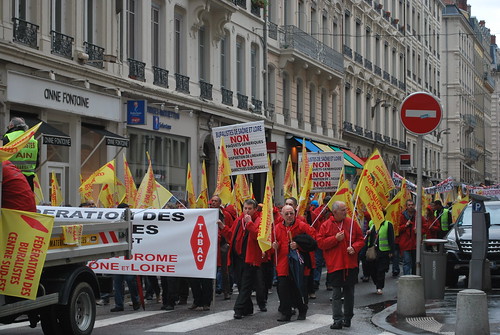
There was a demonstration, or manifestation as the French have it; this seems to fit pretty well, because with all the whistles and the flags and the police escort, it also feels like a bit of performance art.  This was a particularly fine-sounding one, so I stopped to watch.  Which noble cause was being fought for?  World peace? Education? Liberté, égalité et fraternité?

Thursday17

Ah, they're against the ban on plain cigarette packs and closed displays.  Ho hum.  But I do like the way they finish with "No to EU Directives", which is at least pretty comprehensive and covers all bases!

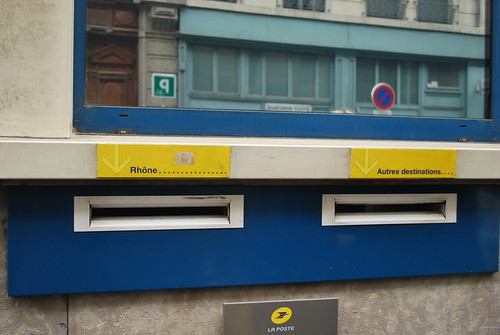
One of the (many) things I love about the French is their entirely unimaginative way of naming bars and cafés; when you're casting around for somewhere to sell you stamps for your postcards, having incomprehensibly lost one of the US stamps, seeing this

Thursday19

around the corner is great.  Where the Café des Postes, télégraphes et téléphones is, there shall be the post office also.  And indeed there was.

Thursday20

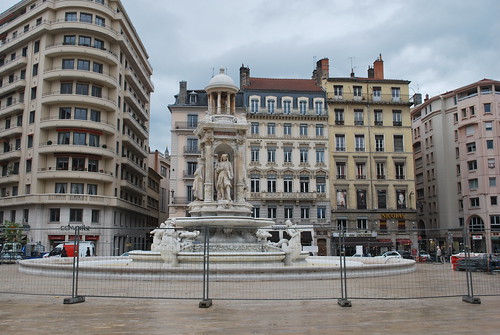
Likewise, I wasn't sure whether this was the Place des Terraux or the Place des Jacobins, but helpfully, there's the Café des Jacobins on the right...  Likewise, you always know what you're going to get at the Bar des Sports in a small town (lots of blokes, big screen, Baby-foot, possibly pool table, cheap drinks and a high tolerance of horseplay).

Thursday21

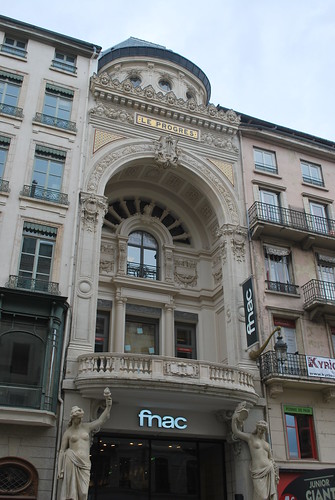
Made a quick trip to Fnac; I do love a Fnac shop.  This one is particularly fine.

Thursday22

So many of the French singer-songwriters I like haven't produced anything new in the last few years; thankfully Jacques Higelin is still going strong...

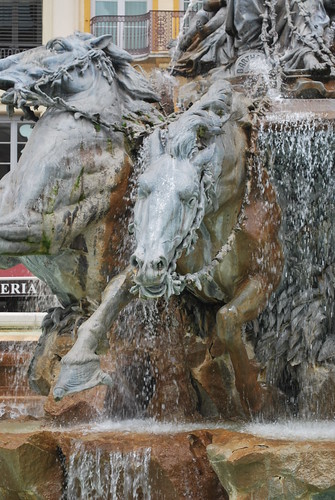
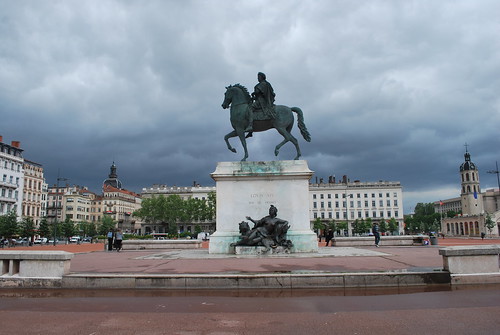
One last picture, of the huge and (on that day) rather desolate Place Bellecour; Louis XIV lords (kings?) it over the square...

Thursday23

At that point the heavens opened.  I ducked into a bar for a pre-dinner drink, and then home via the butchers - veal chop, bearnaise sauce and Provençal green beans. Heaven.  Particularly because I found Un dîner presque parfait which was just lovely - I gather there are similar formats on UK TV but I never have time to catch up with that sort of thing!

Before dinner, I met my lovely landlord, finally - had to pay him for the rent, and while I'd already pretty much settled in, it being the third day of five, he had another couple of hints and tips.  One of the first things he spotted was my knitting:

studio10

Apparently his wife's a knitter, and he was asking about good UK yarn sites for British wools.  I scribbled down some names and URLs including the Ravelry one, just in case!

2013 books, #51-55

Bloodline: a Dick Francis novel, by Felix Francis [audiobook]. Read by Michael Maloney.  Bath: AudioGO, 2012.

This is a classic from the Francis stable (sorry); so glad Felix Francis has taken on the family business.  This time, his protagonist is a young race commentator, Mark Shillingford, with a twin sister who's a top jockey.  In a meeting at Lingfield, he sees sister Clare deliberately stop her horse; when he takes her up on it, they argue, and later that night Clare is dead, having jumped from the 11th floor of a London hotel.  Or so it seems...  This is seriously vintage Francis, without being a complete repetition of what's gone before; and Michael Maloney's reading is excellent, particularly in the commentary sections; he maintains the clipped, stiff-upper-lip decorum of Tony Britton and Nigel Havers while bringing his own edge to it.

Like this, for ever, by S J Bolton. London: Bantam, 2013.

11-year old boys are disappearing from South London and being found by the Thames, their blood drained. Mark Joesbury and Dana Tulloch investigate, but wherever they go, they run into Lacey Flint.  Lacey's young neighbour Barney is convinced his dad has a secret; Tulloch suspects Lacey; Lacey and Joesbury carry on their complicated dance.  Another excellent, complex thriller from S J Bolton, with some switchback twists and turns.  You need to read the other two Joesbury/Flint novels (Now you see me and Dead scared) before this one to understand some of the situation, but it would also work well as a standalone if you're not as hung up as I am on reading books in order!

How to be a woman, by Caitlin Moran. London: Ebury Press, 2011.

I recognised so much in this book, even though I'm four years older than Moran, from a small North East town, not a large West Midlands one, my family was totally different and I've had a completely different life.  In fact, I think the only thing we do have in common other than the 80s references (and let's not underestimate those) is both being women.  I was shocked, air-punchingly-in-agreement, immensely entertained and very occasionally actually appalled by this book, and would recommend it to anyone with a reasonable tolerance for sex and sweariness.  Sometimes Moran will go off on a rant and I'm thinking "sing it, sister!", and then sometimes I'll think "what? hm? hang on!!"; but it's well-written by someone who's never less than compassionate, with a fine self-deprecating edge.

Sidney Chambers and the shadow of death, by James Runcie [audiobook]. Read by Peter Wickham. Oxford, Isis, 2012.

I enjoyed this; a nice gentle read.  But I think I'd expected to enjoy it a bit more.  Sidney is interesting enough - an upper middle-class vicar of Grantchester - and the Cambridge setting is just right.  I think it's the fact that instead of one overarching plot, it's quite episodic, in the tradition of Father Brown.  I also didn't have a lot of sympathy for the main female character...If you like the "cosy" end of detective fiction, this is one for you.  And as ever, I'd recommend Peter Wickham's reading for this sort of book.

The Dazzle, by Robert Hudson. London: Jonathan Cape, 2013.

A novel about a strange phenomenon in 20th century history, the tuna-fishing craze centred around Scarborough in the 1930s.  The book's much more than that, though - Hudson seems to capture exactly the sort of cast-adrift, aimless self-destruction of the inter-war fast set which is depicted in books by Dornford Yates, and in the party set shown so well by Sayers in Murder must advertise.  Well known real-life characters such as Martha Gellhorn and Zane Grey feature along with real tuna-fishers from the period and fictional additions, and the tuna-fishing expedition turns out to cover something entirely more sinister.  The narration takes place from several shifting, unreliable positions, and important events have several versions... An excellent novel from one of the co-writers of Radio 4's Warhorses of letters.


Saturday, June 22, 2013

A midsummer night's dream

Joss Whedon's Much Ado about Nothing - bunked off work early to see it yesterday afternoon and it's wonderful.  See it if you can!


 If you've seen anything else by Whedon, the gang's all here.  Nathan Fillion has a superb cameo part and Sean Maher is genuinely menacing.

Monday, June 17, 2013

2013 books, #46-50

Pigeon English, by Stephen Kelman. London: Bloomsbury, 2011.

Harrison Opoku is eleven and a recent immigrant from Ghana; when he sees a boy he knows slightly stabbed in the street, he decides to investigate in a Boys' Own Adventure sort of way.  Unfortunately he has no idea of the danger he could be leading himself into.  This is, however, quite a joyous book; Harri's sense of fun and enjoyment of life come through, and the details of a pre-teen's daily life, from brands of trainers to how he gets on with his big sister, are poured out in an infectiously amusing way.  I won't spoiler you for the end of this; two of us in our book group didn't see it coming, the third had read the reviews and did...  This was one of the shortlisted books in the "popular" Booker a couple of years ago, and the second we've read as a group; it was a good shortlist!

The betrayal of trust, by Susan Hill. London: Vintage, 2012.

A Simon Serrailler book; and another extremely good novel from Susan Hill.  As ever, you get much more than a detective plot from Hill; and how much murder there is in the book is largely the opinion of the reader.   The detective plot centres around the discovery of bones belonging to Harriet Lowther, a 15-year-old who vanished 16 years before, in a landslide; subsequently, more bones from an unidentified young woman are found.  This is interwoven with the continuing story of Simon and his family, with a generous helping of the continuing discussion of assisted suicide which has run through the series for several books now... Definitely a series you need to read in order, and I have the next one waiting.

Outrage, by Arnaldur Indridason [audiobook].  Read by Garrick Hagon. Bath: Oakhill, [n.d.]

I found this slow to get into, but it built up on me; and the details about Icelandic society are always very interesting.  There are holes in the plot, I think, but this may have been my earlier inattention, and I really didn't enjoy Garrick Hagon's reading of this all that much. Perhaps it was having an Icelandic novel read to me in an American accent, even with a reader as skilled as Hagon, which just didn't strike the right note.

A question of identity, by Susan Hill. London: Chatto and Windus, 2012.

The most recent Simon Serrailler and entirely up to standard.  Old ladies in a new sheltered housing development are being killed in a characteristic way, and there's a connection with an earlier series of murders  I guessed the identity of the killer fairly early on, without really knowing why I was sure; but that really makes no difference with Hill because the plot isn't all there is.  Meanwhile Simon's life takes another turn, and another family secret develops.

White nights, by Ann Cleeves. London: Pan, 2009.

At an art exhibition, Jimmy Perez comforts a man who breaks down in front of a painting; twelve hours later, the man is found hanging.  When it becomes clear that the death is not a suicide, Perez and his colleague Taylor from Inverness investigate.  The Shetland landscape and the intertwined community again play a part in this novel; the "white nights" signify a sort of midsummer madness, where no-one can sleep.  Perez's relationship with Fran Hunter develops during this book; I'm keeping my fingers crossed for them...


Sunday, June 09, 2013

Lyon, day two

So - next day dawned... not exactly bright and clear, but it dawned.

studio6

Set off for my first goal, the Musée des tissus et Musée des arts décoratifs.  Before that, though, I needed to find a post office.  Left the house, found the Metro again (I'd used it the night before but my lack of sense of direction is legendary), and was at the right stop for both, and the right entrance for both, in 15 minutes.  Go, me.

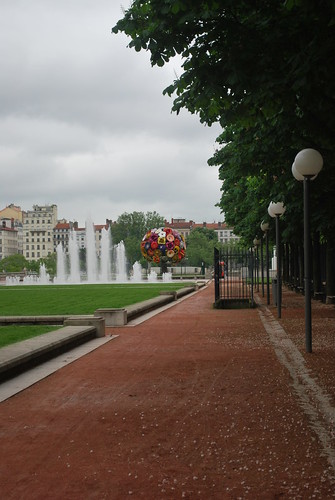
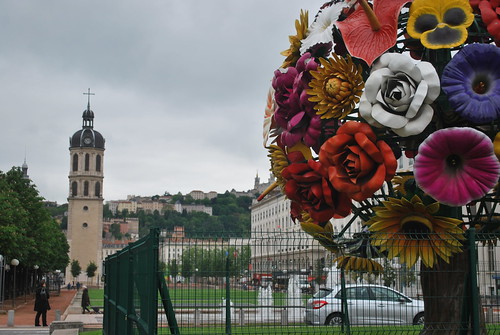
Then, things became a little derailed.  Walked out of the Metro exit and saw this in the Place Antonin Poncet.

Wednesday1

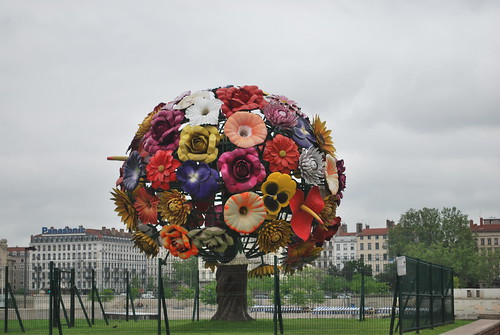
Had to investigate; the colours against that grey, grey sky...

Wednesday2

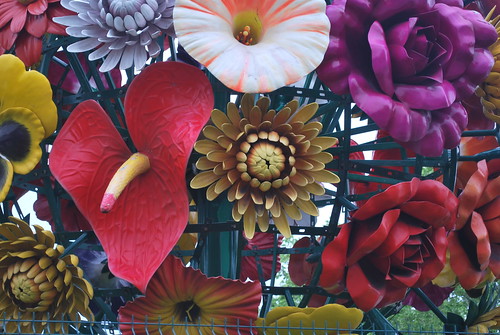
It only got better as you approached it.  Metal flowers on a grid...

Wednesday3

Joyous thing; great shame they've put it behind a fence...

Wednesday4

I had to wait until I got home to find out what it was; English-language Wikipedia says the artist is Jeong-hwa Cheoi, French-language Wikipedia says Choi jeong-hwa; both agree that the artist is South Korean and that the piece is called Flower Tree.  It was lovely.

ETA advice from a Korean-speaking friend is that it's Choi Jeong-hwa - more strange and beautiful things to be found by following the link.

Had the usual surreal French post office experience; multiplicity of counters but none really seeming to want to sell you stamps...


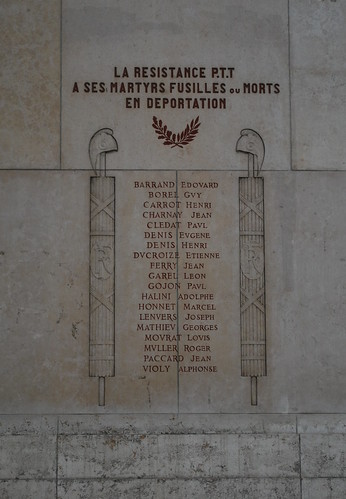
On the way out though, saw this: yes, you're in Vichy France, love.  More of that later.

Wednesday6

I don't understand why the engraving happened like that though; surely you'd left-justify first names and right-justify surnames?  I know that's not the most important thing; but it just made me slightly sad that care hadn't been taken.

After an unfruitful stop at an art supplies shop (they had Herbin paper in the window; I called in to see if they had Herbin ink, but no) I got to the textiles museum:

Wednesday7

The Musée des arts décoratifs closes for lunch, so the museum staff were cantering everyone through there first; and frankly, I mostly wish I hadn't bothered.  Lots and lots of slightly dusty Louis [insert regnal name here] furniture and rooms.  There was, however, one glorious room of "contemporary" silverware; amusingly, the Salvador Dali pieces were invisible to someone my height (5' 3.5") because of the strange shelving...  But some of the rest of it... Beautiful.

The Musée des textiles is utterly gobsmacking.  There's a whole room of weaving from Egypt in the 2nd-3rd centuries.  There are the most beautiful Persian carpets.  There are gorgeous Italian vestments from the 15th century.  There are several rooms of  Lyonnais silks. And the labelling is uniformly rubbish, where it's present at all...  But if you get the chance; go.  It's amazing...  I'd give you a link, but it's broken...

Coming out of there, it was time for lunch.  A very good principle discovered a decade and a half ago is "eat where the people who work nearby eat" - when it gets to noon, and all the white vans and utility vans file off at the same motorway exit, follow them... turns out it works on foot, too.  When I saw a number of people file out of the police station and go into the bistrot  next door, I had a look at the plat du jour and decided that confit de canard might be the way to go.  And it was.  Great place; confit, pommes dauphinoises et ratatouilles and a glass of good Macon for 12 Euros.

Wednesday8

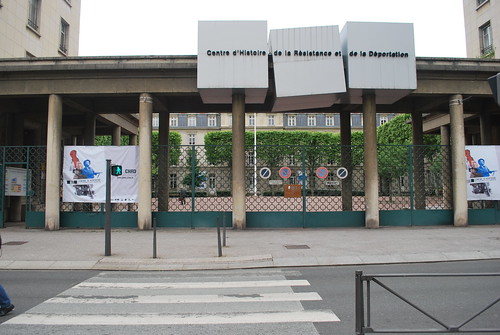
The afternoon was... different.  My next destination was somewhat more grim but no less interesting.

Wednesday9

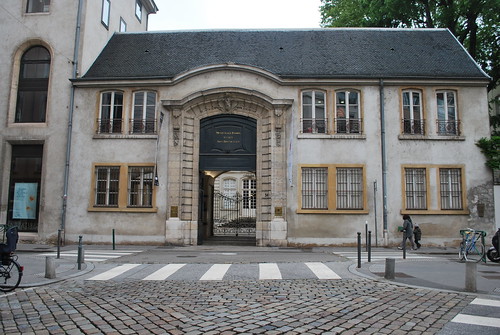
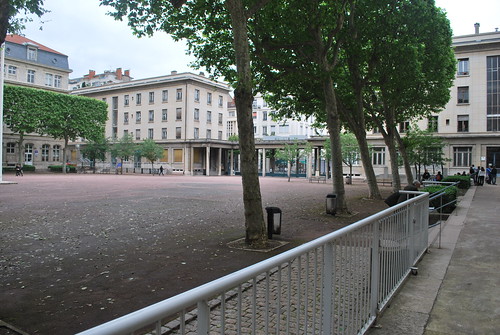
First reaction was that this looked like any secondary school.  Turns out that wasn't such a bad preconception; it had been a medical school in the nineteenth century and now has a lot of government agencies in it; but the architecture at the front is post-War because the Americans bombed it quite comprehensively because it was the Gestapo HQ for Lyon. Here's the view from inside the courtyard.

Wednesday10

The museum itself is excellent.  It's all very wordy, of course; but it has a very large audiovisual element.  You can watch and listen to the survivors of the deportation talking about their experiences.  There were several secondary school parties going round at the same time, and they were obviously very aware of the history; and I was able to tag along with them to a special screening of a documentary on the Klaus Barbie trial.  Not necessarily what you want to be doing on your holiday, but the trial was going on while I was in my first year of college and we followed it quite closely in oral French sessions.  I thought I knew a lot about the trial, but actually seeing the footage of survivors giving their testimony was incredibly powerful and I was glad I'd brought tissues. As ever with French teenagers, very impressed by their total silence and attention when something really catches them; lots of irritating mucking about in the museum, total concentration during an old, slightly scratched documentary film.

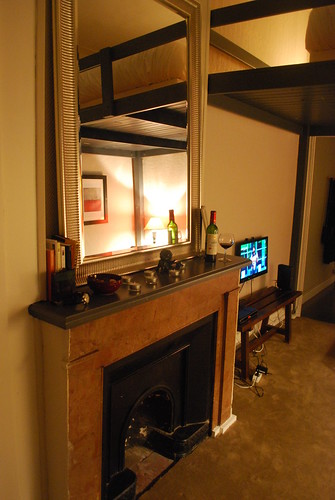
Excellent day.  Bought a veal chop and some mustard on the way home...
studio7

Saturday, June 08, 2013

Lyon, day one

So: I went on holiday.

I last went abroad at the end of 2010 and had a two-day holiday in Luxembourg after a conference; this year, I was sitting in the house on an utterly miserable weekend day at the end of February and decided that was it; I had to go somewhere this year...

A friend had recommended renting a flat; it had never occurred to me that you could rent somewhere for just a few days, but it turns out it was possible.  I got mine through this website; the couple running it are lovely...

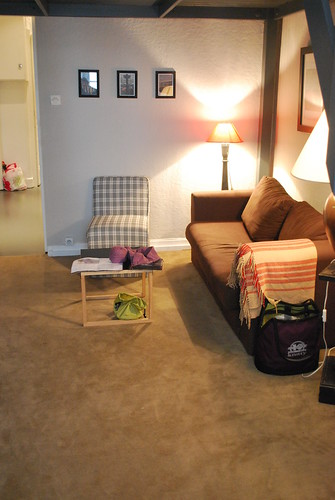
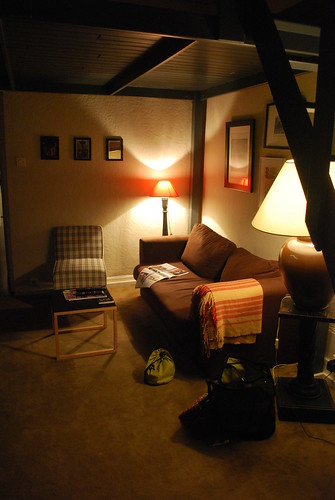
Not a huge space, but considerably more than a hotel room, and cosy (it was cold when I arrived and the radiator was on):

studio3

The quirkiest element was something I didn't photograph properly.  On the photo below, if you look in the mirror you can see the bedroom, a sleeping platform up a ladder from the main room, above the dark ceiling in the first photo.  I could sit up in bed (because I'm short, and short-waisted) but my head brushed the ceiling... (This was all in the photos when I booked)

studio2

Hall, with really nice bathroom off it - best shower ever.  Really.

studio11

Kitchen; sink at other side.  Almost seduced by halogen hob.  Only almost.

studio4

So, there you are; the estate agents' view.  Book away; as long as nobody wants to go next time I do, of course.  And there will be a next time.

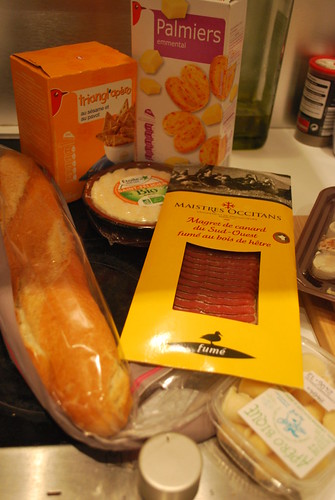
Having picked up the keys from the bar round the corner and cased the joint, I went to the supermarket (found via the Web, just round the corner; baby Auchan).  I may have bought too many apéritif-type things.  Possibly.

aperitifs

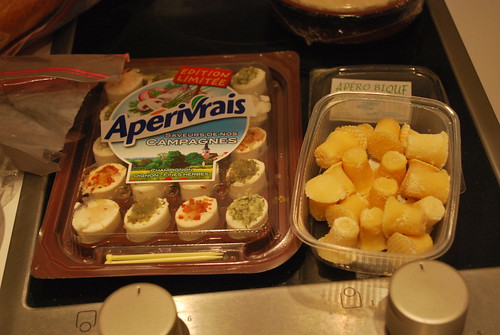
Here we see the extremes of French supermarket apérofromage - the completely synthetic (with plastic stabby things) and the totally artisanale. (Yes, they're goat nipples.  Of course they are.)  Both excellent in their own way.

aperitif_cheese

Not having TV at home, and loving the rubbish that passes for TV in France, I was anxious to plug in; before I went to the supermarket, had a very frustrating play with the buttons on the two remotes (multiple remotes fill me with dismay; still can't work out how the ones at my parents' work) but decided I'd better get food first.  When I got back and started unpacking into the big armoire in the living room, discovered the small pile of maps and instructions including the ones for the TV.  Yay.

I was going to treat myself to a meal out on the first night; but as ever with plane travel, it had taken forever and I was totally and utterly sick of people; so I'd also picked myself up some ready-made taboulé and some merguez; that and crap French TV; lovely.

Wednesday, May 29, 2013

2013 books, #41-45

Fear in the sunlight, by Nicola Upson [audiobook]. Read by Sandra Duncan. Rearsby, Leics.: Clipper, 2012.

Another excellent Josephine Tey novel by Upson, this time largely set in and around Portmeirion and playing on Tey's short relationship wtih Alfred Hitchcock, who adapted her novel A shilling for candles for the screen. All the usual figures in Upson's version of Tey's life are present, and the plot is well up to standard, albeit with the usual number of unlikely coincidences... you don't mind that sort of thing when something rattles along as well as this, though.

Gone girl, by Gillian Flynn. London: Phoenix, 2013.

This is quite astonishing.  As far as the plot goes - a guy running a bar in his hometown in Missouri finds out that his wife is missing; it's their fifth wedding anniversary.  Very early on, we also find out that he's lying to the police, but we're not sure what about.  And really, saying anything more about the plot would be bad in terms of spoilers.  If you're not easily upset, read this book.  It defies so many of the conventions of a detective story plot and its resolution...  I'd love to say a massive amount more about this book, but equally, I don't want to spoil something really quite unusual for anyone else.

Dying fall, by Elly Griffiths. London: Quercus, 2013.

Right up to Elly Griffiths's usual standard.  Ruth hears of the death of a college friend, Dan, in a house fire on the same day as she receives a letter from him, saying he's made an important archaeological discovery but is scared; later, she finds that the fire wasn't an accident and that the house was locked from the outside.  When she gets an invitation from the department to view the bones, she also starts receiving threatening texts.  She wouldn't be Ruth if she didn't head straight into danger, daughter Kate and Cathbad the Druid in tow; unknown to her, Harry Nelson is also on holiday in Lancashire with his family.  Excellently plotted with some genuinely scary moments.

Dead scared, by S J Bolton. London: Bantam, 2012.

I've had this for a year; I really should stop buying books because I "keep them for best" rather than reading them when they come in!  This was incredibly good and I sort of inhaled it.  It's a second book with Lacey Flint and Mark Joesbury, but also features Evi Oliver from another book entirely, and set in Cambridge.  A pattern of woman students killing themselves has aroused suspicion, and Lacey is sent undercover as a student called Laura Farrow.  Lacey has been told not to investigate, but can't help herself, exasperating Joesbury; she teams up with Evi and very strange things start happening to both of them.  This gets Cambridge very right, and it has some absolutely terrifying moments... Brilliant.  And I gather there's another one out - only advantage of leaving reading this one very late!

Murder in Belleville, by Cara Black. New York: Soho, 2000.

Tension mounts in Belleville as hunger-strikers protesting about immigration rules come close to death in a local church. Meanwhile, one of Aimée Leduc's friends is almost killed in a car-bombing which murders a mystery woman living under the name Eugénie Grandet (the French equivalent of calling yourself Jane Eyre). Aimée becomes involved in the networks of Algerian nationalists and Islamic fundamentalists, mixing with everyone from government ministers to explosives dealers.  As with the previous book, Murder in the Marais, Paris is a character in this book and you can follow the track of the action through Google maps - the events taking place in a primary and nursery school are based on actual schools in that street.  (As this is the general area of the school I taught at for a year in the late 1980s, this is very pleasing!)  Black's plotting isn't the tightest out there - this is an action thriller rather than a detective puzzle - but it's an immensely enjoyable book.


Wednesday, May 08, 2013

2013 books, #36-40

Rubbernecker, by Belinda Bauer [audiobook]. Read by Andrew Wincott. Oxford: Isis, 2013.

A man recovering from a coma thinks he's seen a murder.  A student with Asperger's syndrome begins a course in anatomy.  A nurse starts an affair with the husband of one of the other coma patients.  As well as being a really excellently-plotted thriller, this is also a study in our inability to communicate.  In the case of the coma patient, this is a physical thing; in the case of Patrick, the student, a function of his inability to understand people and to make friends.  Excellent and very creepy; and well read by Wincott who's best known for being the voice of Adam Macy in The Archers.

The ghost of Lily Painter, by Caitlin Davies [audiobook]. Read by Annie Aldington, Jilly Bond, Mike Grady and Julie Maisey. Oxford: Isis, 2011.

I saw a reference to this when I was looking up the Finchley Baby Farmers while reading Nicola Upton's Two for sorrow earlier in the year, and I'm extremely glad I did.  I don't know what the audiobook equivalent of unputdownable is, but I listened to all 10 hours over 2 days; the ensemble reading was excellent and it's an extremely well-crafted story covering four generations of a family and a century of secrets, from the death of Queen Victoria to the present day.

Lost cat: a true story of love, desperation and GPS technology, by Caroline Paul.  Illustrated by Wendy MacNaughton. London: Bloomsbury, 2013.

This was lent to me by a lovely colleague who'd borrowed it from Westminster Libraries; and it's a fabulous little book I really wouldn't have come across otherwise.  Caroline Paul had a horrible accident, and then while she was recovering, her cat Tibby went missing.  Weeks later, Tibby suddenly reappeared, but Caroline was desperate to know where he'd been in the meantime; and this is where the GPS technology, and the insanity, creeps in.  This is a lovely little wonder of a book, beautifully and copiously illustrated by Paul's partner Wendy, and containing so much stuff familiar to anyone who's been owned by a cat.  Hilarious, sad and joyful all at the same time.

The moon tunnel, by Jim Kelly [audiobook]. Read by Ray Sawyer. Oxford: Isis, 2008.

A body is found in a tunnel near a former World War II internment camp at Ely; but it turns out to date from the 1970s or 1980s. not the 1940s, and the body seems to be heading into the camp, not out.  Dryden investigates, and becomes embroiled with the history of the Italian community in the area, which leads to the unveiling of many family secrets.  Excellent.

The best of everything, by Rona Jaffe. London: Penguin, 2011. Originally published in 1958.

Rona Jaffe's semi-autobiographical novel is apparently a favourite of Don Draper in Mad men. (Or at least, that's what the reviews say.)  Four young women arrive in New York in 1952 to make their way in the world and find themselves working for a slightly downmarket publishing company.  Radcliffe graduate Caroline is recovering from a broken engagement, ingenue April is initially stunned by the city, actress Gregg has poise but also fragility, and divorcée Barbara supports her mother and child by writing her beauty column.  And then there are men - lecherous men, treacherous men, weak men, overly nice men... The combination of the modernity of some of the women's attitudes and the continuing desperation to "make a good match" are incongruous, and in some cases exasperating.  I really enjoyed this book and would recommend it, but neither of the other two at my book group were very keen!  (I think this is probably the first book I've read with a pair of legs in tights and high heels on the cover since briefly dipping my toe into the murky water of Jackie Collins as a teenager.)


Sunday, April 28, 2013

2013 books, #31-35

Entombed, by Linda Fairstein [audiobook]. Read by Barbara Rosenblat. Rearsby, Leics: WF Howes, 2004.

This was excellent; while Barbara Rosenblat's reading will make the phonebook sound good, this is a really well-written, tight thriller which makes you care about the characters.  In this case, attendees at a lawyers' dinner accidentally become privy to the discovery of a walled-in skeleton in a house once inhabited by Edgar Allan Poe.  It's a good twisting and turning plot with a lot of info on Poe and his circle.  I'll be looking for more in this series.

The man who ate the world: in search of the perfect dinner, by Jay Rayner [audiobook]. Read by the author.  Rearsby, Leics.: Clipper/WF Howes, 2008.

Rayner tells the story of how, several years after he became a restaurant critic, a chef told him that Michelin *** restaurants exist only so that the very rich can eat the same food all over the world.  Determined to prove the chef wrong, Rayner travels the world to find the perfect meal.  We have accounts of restaurants in Las Vegas, Dubai, London, Tokyo and Paris, some truly epic meals, some local colour, a bit of a discussion of the food blogosphere and a lot of very funny commentary.  The author's a great reader with very good comic timing, and this is a fun read even if you, like me, will probably never be able to afford to eat in the establishments described...

Valentine Grey, by Sandi Toksvig. London: Virago, 2012.

Valentine Grey hates England in 1897, arriving after an idyllic childhood in India with her father.  The only bright spot is her exciting but irresponsible cousin Reggie and his theatrical friends.  When a volunteer brigade is created to support the troops in the Boer War, Reggie's father signs him up, to Reggie's horror. Valentine decides to save both of them by dressing in Reggie's uniform and joining the bicycle corps.  Both of them find that "freedom" has its price; Reggie's life as a gay man in Victorian London is as confining as the army, and Valentine learns the horror of war.  This is an extraordinary book, both moving and very funny, and with genuine anger about both war and prejudice.

One false move, by Harlen Coben. London: Orion, 2004.  Originally published 1998.

A Myron Bolitar book; and well up to the usual standard.  Myron is conned into looking after rising basketball star Brenda Slaughter, on the basis that he can become her agent. But Brenda's father goes missing, and somehow, someone has links with organised crime.  Myron's life, business and relationship are all at risk, and his compulsion to discover the secret just drive him into more trouble.

Raven black, by Anne Cleeves. London: Pan, 2006.

I gather this is the first of the novels on which the recent mini-series Shetland was based; but it's difficult to tell this other than by the name of the detective.  A young girl, Catherine Ross, is discovered dead in a snowy field, strangled with her own scarf.  There is one obvious suspect, an elderly learning disabled man in the next cottage along, but when the mainland police arrive to investigate they're determined to keep a more open mind than the locals.  There's also an echo of the disappearance of young Catriona Bruce years before, and this opens up long-sealed resentments and family secrets.  I really didn't see the dénouement of this book coming!  I'll definitely be reading the others in this series and Cleeves's other books.

Wednesday, April 10, 2013

2013 books, #26-30

Legal briefs: stories by today's best thriller writers. Edited by William Bernhardt.  London: Headline, 1998.

I'm never sure how I feel about short stories - I love Saki, and de Maupassant, but they're meant to be the best of the bunch, I think...  Anyway, very often I'll get halfway through a collection of short stories and sort of run out energy, and about a year ago I did that with this collection, so my memory of all of them isn't that great.  However... Steve Martini's story, Poetic justice, made me cringe slightly with its doggerel/prose/folksy quality although I really enjoy his novels.  John Grisham contributes a three-page story which just rips you apart with its pathos; quite stunning. Michael A. Kahn's contribution gives you an idea of how law just might be practised in Cook County; Philip M. Margolin plays on the inaccuracy of eye-witnesses, and Jeremiah Healy sets up an excellent twist in the tail, before bottling it slightly at the end. Philip Friedman tells a bleak little tale of a lawyer heading cross country into his past, before Lisa Scottoline rounds up the collection with a somewhat hilarious re-take on "take your daughter to work" day; said daughter being three months old and father being a hapless and sleep-deprived new father of twins.  Definitely worth getting hold of.

The daughter of time, by Josephine Tey. London: Folio Society, 2006. First published 1951.

This was my suggestion for book group this time round.  I'm not sure it made for great discussion, but it was very interesting to read it again in the light of the discovery of Richard III's bones under a Leicester car park, and part of the reason for getting the Nicola Upson (last set of book reviews) out of the library was the Tey connection.  I treated myself to a Folio edition to replace my battered paperback when I found it in the lovely Oxfam bookshop in Saffron Walden a year or two ago, and the introduction by Alison Weir is worth the £4 or so I paid.  Weir points out, without actually using the phrase, that this is really the first "cold case" detective novel.  There are elements in some of the Wimsey stories, I suppose; but this is the first where the protagonists, as very often, are dead, where the eyewitnesses are not only more-than-usually unreliable but also long dead, and where politics and propaganda blur the scene.  Weir also probes the holes in Tey's defence of Richard III; some of them caused by accounts being discovered/published only later; some caused by an over-zealous wish to set the record straight.  In discussion, we were all slightly boggled by the very luxurious NHS of the past.  I think I need to go back and read the other Alan Grant novels again though...

The debt to pleasure, by John Lanchester. London: Picador, 1996.

This is a wonderful, funny, sinister little book.  Tarquin Winot, epicure and dreadful snob, sets out to produce a culinary year through menus while travelling from Portsmouth to the Provençal town of Ste-Eulalie.  As the book progresses though, you realise that there's more going on - why is he carrying the Mossad manual of surveillance techniques?  why has he shaved his head?  Tarquin is a splendid, monstrous character, and the slow reveal of this book makes it unputdownable, to the extent that I suddenly realised I'd gone past my Tube stop on one occasion...

The casual vacancy, by J K Rowling [audiobook]. Read by Tom Hollander.  Oxford: Isis, 2012.

This was great.  I'd started reading the book, but had to take it back to the library because someone else needed it, and then I found out who was reading the audiobook...  I really enjoyed this.  No, it wasn't Harry Potter (which seems to have been the main criticism) but it had a seething, lively bunch of characters who reflect life in a small town pretty well.  At first I thought they were going to be caricatures; but as it develops, the main characters become three-dimensional and there's a huge amount of authorial sympathy for the most alienated and powerless.  If this is what Rowling is going to do in future, I'm all for it...  Hollander's reading is absolutely excellent, as I'd hoped.

Beekeeping for beginners, by Laurie R. King. Kindle edition.

Background to the first Holmes/Russell novel, The beekeeper's apprentice. How Holmes and Russell inadvertently saved each other's lives.  Lovely little vignette which turned up as a very cheap read on Kindle. I wondered at the end whether it was a duplication of something in A study in Sherlock which King edits and which is sitting on my to-read pile, but it turns out not, happily.  If you're a Holmes/Russell fan, this is definitely worth getting hold of...